


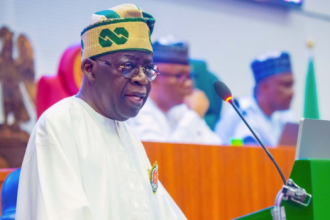


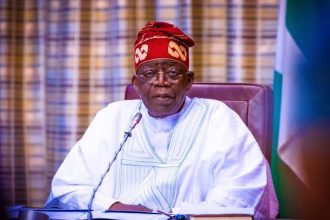
- President Bola Tinubu described his 65th Independence Anniversary address as a “message of hope and a call to action” for Nigerians.
- Repeatedly emphasized unity, saying: “Let all hands be on deck. Let us believe, once more, in the boundless potential of our great nation.”
- Urged Nigerians to farm, build factories, and patronize locally made goods, stressing: “Let us be a nation of producers, not just consumers.”
- Cited the Ministry of Interior’s reforms on faster passport processing as proof that government institutions can deliver efficient services.
As Nigeria marks her 65th Independence Anniversary, President Bola Ahmed Tinubu delivered a heartfelt national address urging citizens to embrace productivity, innovation, patriotism, and a renewed spirit of collective responsibility. His message, broadcast nationwide from the Presidential Villa in Abuja, struck a balance of hope, reflection, and a firm call to action as the nation navigates a complex economic and political landscape.
The President’s speech was not only celebratory but also a roadmap for the future, emphasizing that Nigeria’s progress depends on the combined effort of government and citizens alike. He likened the economy to a complex plumbing system the federal government is working to repair, while urging Nigerians to “turn on the taps of productivity, innovation, and enterprise.”
Tinubu opened his Independence Day message with an emphasis on hope, symbolizing Nigeria’s resilience through six and a half decades of challenges, growth, and transformation.
“On this 65th Anniversary of our Independence,” the President declared, “my message is hope and a call to action. The federal government will continue to do its part to fix the plumbing in our economy.”
This metaphor highlighted the government’s ongoing economic reforms, from fiscal discipline to investment in infrastructure and digital transformation. Tinubu’s acknowledgment that government alone cannot carry the burden reflects a shift in leadership rhetoric calling on Nigerians across sectors to embrace self-reliance and productivity.
The Call for Productivity and Innovation
In one of the most striking parts of his address, Tinubu drew attention to the importance of productivity as the key driver of sustainable growth.
“Now, we must all turn on the taps of productivity, innovation, and enterprise,” he said, citing the Ministry of Interior’s recent reforms in passport processing as an example of efficiency and citizen-centered governance.
The Ministry of Interior, under the Tinubu administration, had earlier introduced technological upgrades that reduced the processing time for international passports from months to just weeks. Tinubu used this achievement as a case study to demonstrate how government institutions can set the pace for innovation and service delivery.
He urged state governments (sub-national entities) to adopt similar reforms and partner with the federal government to expand opportunities across agriculture, manufacturing, and digital industries.
“Nigeria First”: A Call for Economic Patriotism
A significant portion of the President’s address focused on economic nationalism and the urgent need for Nigerians to prioritize homegrown solutions.
“Let us be a nation of producers, not just consumers. Let us farm our land and build factories to process our produce. Let us patronize ‘Made-in-Nigeria’ goods. I say Nigeria first,” Tinubu asserted.
This statement echoed his administration’s ongoing push for industrialization, value addition in agriculture, and the reduction of overdependence on imports. By urging Nigerians to pay taxes faithfully, Tinubu reinforced the idea that patriotism is not only symbolic but also practical – requiring citizens to contribute actively to the funding of national development.
All Hands on Deck: Unity as a Foundation
Tinubu’s message repeatedly stressed the importance of unity, collaboration, and faith in Nigeria’s boundless potential.
“Finally, let all hands be on deck. Let us believe, once more, in the boundless potential of our great nation. With Almighty God on our side, I can assure you that the dawn of a new, prosperous, self-reliant Nigeria is here,” the President concluded.
His closing remarks carried both a spiritual and motivational undertone, tying together patriotism, faith, and the promise of a brighter future.
National Reaction: Citizens, Leaders, and Analysts Weigh In
The President’s Independence Day message quickly drew reactions across the country. From governors to business leaders and everyday citizens, responses were largely reflective of the hopes, challenges, and expectations that Nigerians attach to Independence Day celebrations.
Political Leaders
Several state governors applauded the President’s emphasis on sub-national collaboration. Governor Babajide Sanwo-Olu of Lagos noted that the speech resonated strongly with his administration’s “T.H.E.M.E.S Plus Agenda” of urban farming and local industrialization. Similarly, Governor Umo Eno of Akwa Ibom stressed that the call to produce rather than consume aligned with his vision of making the state an agro-industrial hub.
Business Community
The Manufacturers Association of Nigeria (MAN) welcomed Tinubu’s call for “Nigeria first” economic policies but urged the federal government to address key structural issues such as power supply, foreign exchange stability, and access to credit for small and medium-scale enterprises (SMEs).
Citizens’ Voices
On the streets of Abuja, Lagos, and Port Harcourt, citizens expressed mixed feelings. While many praised the President’s hopeful tone, others voiced skepticism, citing the persistent challenges of unemployment, inflation, and insecurity.
Grace Okonkwo, a trader in Abuja’s Wuse Market, said:
“I like what the President said about buying Nigerian-made goods. I sell textiles, and I know people prefer foreign fabrics. If the government supports local industries, we traders will benefit.”
Conversely, Chidi Obiora, a young graduate in Enugu, remarked:
“Speeches are good, but Nigerians want action. We need jobs, we need affordable food, and we need security to farm and trade. The government must match words with results.”
Historical Reflection: 65 Years of Independence
Nigeria’s Independence Day, first celebrated on October 1, 1960, remains a powerful symbol of the nation’s sovereignty and resilience. Over the decades, the country has weathered political upheavals, civil war, economic crises, and democratic transitions. Each anniversary presents an opportunity for reflection on past achievements and ongoing struggles.
Tinubu’s 65th Independence message comes at a time when the nation is grappling with global economic headwinds, security challenges, and debates about restructuring and true federalism. His speech sought to inspire optimism while addressing the urgent need for reforms that resonate with ordinary Nigerians.
Analysts’ Take: The Road Ahead
Policy analysts believe the President’s emphasis on productivity and innovation is both timely and necessary. Dr. Amina Bala, an economist at the University of Abuja, argued that Tinubu’s “plumbing” metaphor illustrates the urgent need for structural reforms in Nigeria’s economic pipeline.
“We must fix the leakages, block revenue losses, and ensure that productivity flows across all sectors. But beyond rhetoric, this requires investment in education, technology, and infrastructure,” she said.
Similarly, security analysts noted that without addressing insecurity in rural communities, particularly in the North-Central and North-West regions, the push for agricultural productivity might remain elusive.
Tinubu’s Independence Message in Context
This year’s Independence Day address is President Tinubu’s third since assuming office in May 2023. His previous speeches centered on subsidy removal, restructuring of government finances, and calls for resilience. This year’s message, however, shifted tone toward inclusivity, shared responsibility, and patriotism signaling a maturing leadership narrative.
Observers suggest that the President is seeking to build a legacy that goes beyond policy reforms to include a renewed social contract between government and citizens. His emphasis on tax compliance, local production, and national unity fits within his broader “Renewed Hope Agenda,” which aims to transform Nigeria into a self-reliant and globally competitive economy.
International Observers Weigh In
Nigeria’s 65th Independence Anniversary also drew attention from international partners. The U.S. Mission in Nigeria, in a congratulatory statement, applauded Tinubu’s emphasis on innovation and productivity, pledging continued partnership in areas of digital economy and renewable energy.
The African Union (AU) also lauded Nigeria’s leadership role on the continent, emphasizing that a prosperous Nigeria is central to Africa’s collective progress.
A New Dawn or Another Rhetorical Promise?
President Tinubu’s 65th Independence Anniversary message was a carefully crafted blend of optimism, patriotism, and pragmatic policy direction. His call for productivity, innovation, and “Nigeria first” resonates deeply in a nation yearning for solutions to economic and social challenges.
Yet, as analysts and citizens alike have pointed out, the real test lies in the implementation of these lofty ideals. Nigerians will be watching closely to see whether the federal and state governments can translate rhetoric into measurable progress in agriculture, industrialization, job creation, and national unity.
For now, as the green-and-white flags fly high and parades fill the streets, the President’s words serve as a reminder that Nigeria’s destiny rests not only in the hands of leaders but in the collective will of its people.
“Happy 65th Independence Anniversary, and may God continue to bless the Federal Republic of Nigeria,” Tinubu concluded, a sentiment that resonates across a nation determined to rise above its challenges and harness its boundless potential.


Thank you for your word of advice and encouragement to us Nigeria.