

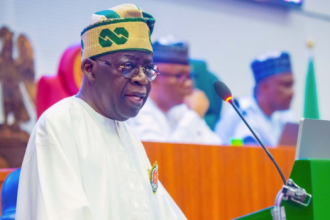



- The Federal Government, led by President Bola Tinubu, is engaging in intensive talks with labour unions—especially ASUU—to prevent the planned strike and ensure uninterrupted learning in Nigerian universities.
- Hon. Dr. Maruf Tunji Alausa, the Minister of Education, reiterated the administration’s dedication to dialogue and reforms aimed at stabilizing the education system.
- The Minister quoted President Tinubu’s firm stance that under no circumstance should students be forced out of school due to industrial action.
- The inclusion of legal officers and justice ministry officials in negotiations ensures that all agreements are not only fair but also legally binding and sustainable.
“Today, I reaffirmed Mr. President’s clear directive: our students must remain in school. We are intensifying negotiations with all tertiary unions and are close to concluding fair and lasting agreements.
Unlike in the past, this administration has adopted a unified negotiation framework to ensure efficiency, transparency, and legally binding outcomes.
The Technical Working Group comprising the National Salaries, Incomes and Wages Commission, the Budget Office, the Ministry of Labour, and for the first time, the Solicitor-General and officials from the Ministry of Justice is finalizing government’s position to ensure every agreement is sustainable and enforceable.
Already, we have released ₦50 billion for arrears and allowances, budgeted ₦150 billion for the Needs Assessment Fund, and resolved issues around promotion arrears and wage awards.
I appeal to our unions dialogue, not strikes, must remain our path forward. This government is sincere, proactive, and committed to stability in our education system.”
This public stand from the Education Minister captures both the intentions and challenges facing the government as it seeks to reconcile long-standing demands from academic staff with the fiscal realities of governance.
Background: A Recurrent Crisis
The ASUU Discontent
For decades, the Academic Staff Union of Universities (ASUU) has been at the forefront of demands for better funding, improved infrastructure, timely payment of allowances, and clearer conditions of service across Nigeria’s public universities. Previous agreements signed with successive governments have often been honored only in part or not at all leading to repeated industrial action that disrupts academic calendars and undermines institutional stability.
In recent months, tensions have escalated. ASUU has threatened to launch a nationwide strike unless the federal government addresses unresolved issues. The union has issued ultimatums, demanding prompt action.
Observers note that many of the union’s demands are long-standing; some date back a decade or more. Successive administrations have been criticized for piecemeal responses, delayed implementation, or lack of adherence to negotiated terms.
The Government’s Recognized Weakness
Past administrations have often relied on fragmented negotiation frameworks—separate committees for universities, polytechnics, and colleges of education. This siloed approach sometimes led to contradictory terms, duplication of efforts, and delays. The Tinubu administration has acknowledged this weakness and pledged a change.
Moreover, government sources concede that budget constraints, competing priorities, and processes of legislative appropriation have frequently stymied prompt fulfillment of union agreements. Some critics also point to weak follow-through systems and insufficient legal underpinnings for many memoranda of understanding, which allowed some provisions to remain unenforced.
Against that backdrop, the current push is widely seen as a test of political will, institutional discipline, and the ability to balance union expectations with national fiscal prudence.
What the Government Has Offered So Far
Unified Negotiation Framework
A central pillar of the Tinubu administration’s approach is the adoption of a single, unified negotiation framework for all tertiary unions. Gone are the days of multiple parallel negotiation tracks; the government now insists that one expanded committee will handle all academic and non-academic demands collectively.
To that end, an expanded federal committee has been inaugurated to replace the older, segmented system and is charged with engaging ASUU, its non-academic counterparts, and other tertiary unions in a coordinated and responsive fashion.
Technical Working Group & Legal Oversight
Recognizing that agreements must be enforceable, the administration has set up a Technical Working Group that includes:
- National Salaries, Incomes and Wages Commission
- The Budget Office
- Ministry of Labour
- Ministry of Justice (including the Solicitor-General)
- Ministry of Education
The inclusion of legal actors is intended to ensure that negotiated terms are legally binding and not mere moral commitments. This direct involvement of the Ministry of Justice is being highlighted by officials as a first for the negotiation process.
The working group is tasked with finalizing the government’s position, drafting counter-offers, and guaranteeing that any agreement is sustainable, enforceable, and internally consistent.
Financial and Commitment Measures
In a bid to show good faith, the government has already made several financial moves:
- ₦50 billion has been released to address arrears and allowances, particularly the so-called “earned academic allowance” owed to academic and nonacademic staff.
- A ₦150 billion allocation has been included in the 2025 budget for the Needs Assessment Fund, intended to strengthen infrastructure, facilities, and other institutional needs. The first tranche of ₦50 billion is already ready to be disbursed.
- The government claims to have resolved certain promotion arrears, wage awards, and teaching allowances.
Dr. Alausa further pledged that remaining arrears would be cleared by 2026.
Through these moves, the government aims not only to placate union agitation but to restore confidence that education remains a national priority.
Current Status of Negotiations & Next Steps
Phase of Final Offers
According to multiple reports, the negotiation process has entered a final-stage phase. The Technical Working Group is preparing a counter-offer to present to ASUU through the expanded committee.
The target window for handing over that counter-offer is imminent. This aligns with earlier assurances from the Education Ministry that resolution is within sight.
Appeals to Patience and Reason
Dr. Alausa has repeatedly appealed to ASUU and other unions to show restraint:
- Avoid strike as a first response
- Engage in sustained dialogue
- Recognize that not every demand can be met immediately, but meaningful concessions are underway
“We appeal to the unions not to see strike as a first option. The government genuinely wants to resolve these issues comprehensively and permanently.”
These appeals are grounded in the administration’s insistence that the academic calendar must not suffer further disruption.
Government Confidence & Optimism
Officials express cautious optimism that a breakthrough is near. In media briefings, Dr. Alausa affirmed that about 80% of the union demands overlap across tertiary institutions, making a unified agreement more feasible. The remaining 20% are seen as institution-specific concerns.
Moreover, the president’s political backing is cited as a key asset: the very directive to “keep students in school” is often repeated by negotiators as the administration’s top priority. Officials also stress that the inclusion of legal oversight in negotiations distinguishes this approach from prior ones.
Challenges, Risks, and Critiques
Union Trust Deficit
Even as the government works to avoid a strike, getting the unions to trust its commitments is a steep climb. Skepticism is widespread, born of years of repeated broken promises and delayed payments. Some union leaders may demand more binding guarantees or third-party monitoring.
Fiscal Realities and Competing Priorities
While the figures of ₦50 billion and ₦150 billion are significant, Nigeria’s fiscal landscape is constrained by revenue shortfalls, debt servicing, and other sectoral demands (health, infrastructure, security). Sustaining recurrent liabilities over time may stretch budgets or require revenue trade-offs. Critics will likely scrutinize whether new commitments are financially sustainable.
Implementation Risk
Past agreements have faltered at the “implementation” stage delays, ambiguous clauses, contested interpretations, or poor enforcement have derailed intended benefits. Even with legal inputs, the capacity of ministries and agencies to execute agreed terms on time will be tested.
The Political Angle
Some analysts may view the current push as politically motivated an attempt to contain unrest quickly for electoral optics or political capital. The government must ensure the process remains sincere rather than purely tactical. Any perception of undue haste or corner-cutting could undermine legitimacy.
External Pressures
Should negotiations falter, the union may still mobilize mass strikes, which would compound public frustration and strain government institutions. Prolonged closure of universities would further erode confidence in federal capacity to manage critical sectors.
What Stakeholders Are Saying
Union Officials & Lecturers: Many welcome the renewed engagement, though demands persist about the depth and binding nature of offers. They are keenly watching whether disbursed sums reach intended beneficiaries and whether infrastructure promises follow through.
Students & Parents: Their patience is wearing thin. Prolonged disruptions translate to delays in graduation, credential validity, and additional costs. Many see the current negotiations as a last chance to avoid further academic loss.
State Governments & Tertiary Institutions: Some may push for clarity on how revitalization funds will reach institutions, who qualifies, and how oversight will work.
Civil Society & Media: Observers are tracking the process as a litmus test for governance, accountability, and the government’s ability to manage national crises without defaulting to repression or concession.
What Happens Next?
- Official Release of Counter-Offer
The working group is expected to hand the finalized counter-offer to the expanded negotiation committee imminently. That offer will form the basis of further review by the unions. - Union Response & Feedback
ASUU and other tertiary unions will dissect the proposal, potentially return counter-proposals, or request clarifications, especially on enforceability. - Signing and Legalization
If consensus is reached, the agreement would ideally be converted into binding documents with clear implementation timelines. The inclusion of the Solicitor-General and Ministry of Justice is intended to smooth this step. - Disbursement & Implementation
Funds must flow, arrears cleared, infrastructure interventions scheduled, and compliance monitored. The process must demonstrate credibility and speed to sustain trust. - Post-Agreement Monitoring & Enforcement
An oversight mechanism possibly involving independent auditing or periodic reporting may be necessary to prevent future slippages. - Continued Dialogue Culture
If successful, the unified negotiation model may serve as a blueprint for handling future labor challenges across other sectors.
Implications for Nigeria’s Higher Education Future
If the Tinubu administration succeeds in securing a durable agreement, the gains could be transformative:
- Stabilized academic calendars and reduced disruptions
- Enhanced institutional confidence and morale among faculty and staff
- Renewed investment flows and infrastructure upgrades
- Improved international standing and academic competitiveness
- A more predictable framework for future labor negotiations
Conversely, failure or a weak accord may embolden future strikes, deepen distrust, deter donors, and further erode the prestige of public universities.