





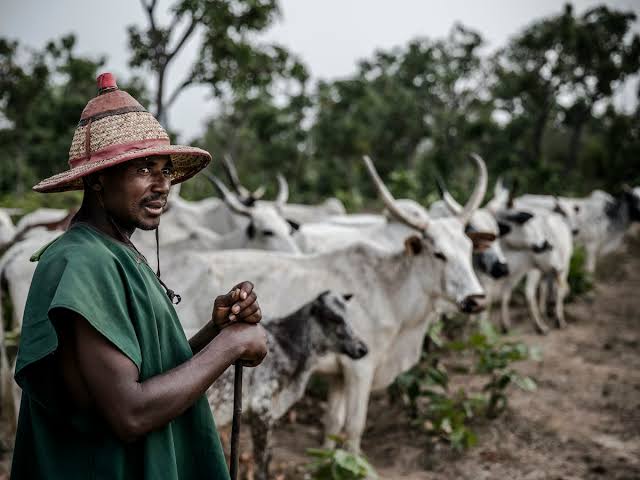
In Benue State, a herder identified as Saleh Abu has been arraigned before the Makurdi Chief Magistrates’ Court on a three-count charge. The charges include conspiracy, open grazing, and causing damage to crops.
Abu, who hails from Awe Azara in Nasarawa State, was accused of openly grazing his cows and sheep, which resulted in significant damage to crops owned by Mr Sesugh Hiligh. The incident was reported to the police on July 17.
According to the prosecutor, Insp Godwin Ato, the defendant and others at large allegedly trespassed onto Hiligh’s farm, situated at Railway Mbamar Village in Guma Local Government Area of Benue. The animals, left to graze freely, reportedly consumed crops worth a substantial sum of N700,000.
The alleged actions of the defendant are said to have violated both Section 97 of the Penal Code, Law of Benue, 2004, and Section 19(1)(2)(3)a of the Open Grazing Prohibition and Ranches (Establishment) Law of Benue, 2017.
During the court hearing, Abu pleaded not guilty to all charges brought against him. Chief Magistrate Mrs. Roseline Iyorshie granted bail to the defendant, setting the sum at N500,000, along with a surety who must provide a similar amount.
The case has been scheduled for mention on August 21, where further proceedings will take place to address the alleged offenses. The outcome of this case will be crucial in addressing issues related to open grazing and conflicts between herders and farmers in the region.
The Benue State government has been taking measures to address the challenge of open grazing and promote ranching as a more sustainable and peaceful alternative for animal husbandry. This case may serve as a significant example of enforcing the laws in place to protect farmers’ livelihoods and mitigate conflicts between herders and farmers in the state.
The arraignment of Saleh Abu highlights the ongoing efforts by the Benue State government to address the recurring conflicts between herders and farmers in the region. Open grazing has been a contentious issue, leading to clashes and damage to crops, which has had severe consequences for farmers’ livelihoods and the overall agricultural sector.
The Open Grazing Prohibition and Ranches (Establishment) Law of Benue, 2017, was enacted to mitigate these conflicts and promote a more sustainable approach to animal husbandry through ranching. The law aims to curtail open grazing and encourage herders to adopt modern ranching practices, thereby reducing conflicts over grazing lands and ensuring the protection of farmers’ crops.
The case against Saleh Abu serves as a significant test for the implementation of these laws and the judiciary’s commitment to enforcing them. The successful prosecution of individuals involved in open grazing and causing damage to crops will set a precedent, sending a strong message about the consequences of violating the established regulations.
Furthermore, the granting of bail to Abu by Chief Magistrate Mrs. Roseline Iyorshie highlights the importance of upholding the principles of justice while allowing due legal process to take its course. It demonstrates that the judiciary is impartial and committed to fair treatment, ensuring that all parties involved in the case have the opportunity to present their arguments and evidence.
As the case continues, it is likely to draw attention from various stakeholders, including local communities, farmers’ associations, herders, and civil society organizations. The outcome may serve as a pivotal moment in promoting dialogue and finding lasting solutions to the persistent challenges related to open grazing and farmer-herder conflicts.
The Benue State government, in collaboration with relevant stakeholders, may use this case as an opportunity to reinforce the importance of ranching as a sustainable and peaceful alternative to open grazing. By actively engaging with herders and providing support for the transition to ranching, the government can foster an environment of cooperation and reduce the potential for conflicts in the future.
The resolution of this case may also influence other states facing similar challenges, encouraging them to adopt and enforce similar laws to protect farmers and promote modern, responsible practices in animal husbandry.
As the trial date approaches, all eyes will be on the court’s proceedings and the final judgment. The case serves as a reminder of the need for balanced and inclusive approaches to resolving conflicts and promoting harmony between different segments of the agricultural sector in Benue and beyond. The goal is to achieve peaceful coexistence while ensuring the prosperity of farmers and herders alike.