



For years, Nigeria’s aviation industry grappled with a crisis that threatened its very existence. This article examines how an artificial exchange rate and dollar subsidy trapped airline funds and how decisive reforms restored confidence and cleared the backlog.
Today, under President Bola Ahmed Tinubu, Nigeria’s bold economic reforms particularly the removal of subsidies and the unification of the naira exchange rate have transformed the story. The country’s reputation in the global aviation community is being rebuilt, and foreign carriers are once again showing confidence in Nigeria’s market.
Understanding the Root of the Problem
The Artificial Exchange Rate and Dollar Subsidy
During the previous administration, Nigeria’s Central Bank maintained a tightly controlled exchange rate policy. The official rate hovered around ₦450 per dollar, even when the real market rate exceeded ₦700–₦800 on the parallel market.
The rationale was simple but short-sighted: keep the naira stable, control inflation, and ensure cheaper access to foreign exchange for “essential” sectors. However, this created a multi-tiered exchange rate system riddled with inefficiencies and corruption.
Airlines and other foreign investors selling goods and services in Nigeria were required to convert their earnings at the official subsidized rate, but when it came time to repatriate their funds, the Central Bank could not provide the needed foreign currency.
This mismatch between the inflow of dollars from ticket sales and the limited outflow allowed by the Central Bank created a massive backlog. By 2022, the amount of foreign airline funds trapped in Nigeria exceeded $850 million, according to data released by the International Air Transport Association (IATA).
How the Crisis Unfolded
Trapped Funds and Global Outrage
The problem began as a small backlog in late 2021 but quickly snowballed into a full-scale crisis by mid-2022. Airlines like British Airways, Emirates, Air France, Lufthansa, and Turkish Airlines found themselves unable to repatriate their ticket sales revenue.
To protect themselves from further losses, several airlines suspended ticket sales in Nigeria or restricted access to low-fare inventories. In September 2022, Emirates Airlines made global headlines when it suspended all operations to and from Nigeria, citing the inability to recover over $85 million in trapped revenue.
This was a major embarrassment for Africa’s largest economy. Emirates was a flagship carrier connecting Nigeria to Dubai and beyond, serving as a vital link for tourism, trade, and investment.
The Nigeria Civil Aviation Authority (NCAA) responded by banning new ticket sales for five major carriers British Airways, Air France, Lufthansa, Emirates, and Turkish Airlines to prevent further accumulation of trapped funds. The ban was intended as a pressure tactic to force both the government and airlines to renegotiate operational terms and foreign exchange access. Unfortunately, it backfired.
Reduced Flights, Soaring Ticket Prices, and Passenger Chaos
With reduced flight frequencies, fewer available tickets, and rising uncertainty, ticket prices skyrocketed. A Lagos–London economy ticket, which previously sold for around ₦400,000, suddenly exceeded ₦1.5 million.
Many Nigerians were forced to connect through neighboring countries such as Ghana or Benin Republic, where tickets were cheaper and flights more reliable.
For a country already struggling with inflation, insecurity, and unemployment, the aviation crisis dealt a serious blow to business travel, tourism, and foreign investment.
By late 2022, Nigeria had been officially listed by IATA as one of the top countries in the world with blocked airline funds, alongside Venezuela, Bangladesh, and Lebanon. This listing severely dented Nigeria’s image as a reliable trade partner.
Partial Relief but Persistent Problems
CBN’s $265 Million Intervention
In July 2022, the Central Bank of Nigeria (CBN) released $265 million to partially settle outstanding obligations to 23 international airlines. This was a commendable gesture, but it was far from enough.
Even after the intervention, over $500 million remained trapped by the end of that year. The gap persisted because Nigeria’s foreign exchange reserves were depleting rapidly, largely due to the dollar subsidy policy that drained the nation’s reserves in an effort to artificially prop up the naira.
With global oil prices fluctuating and Nigeria’s oil production declining due to theft and vandalism, the CBN simply did not have enough hard currency to go around.
The Turning Point: Tinubu’s Economic Reforms
When President Bola Ahmed Tinubu assumed office in May 2023, he inherited an economy weighed down by multiple distortions—fuel subsidies, dollar subsidies, and a fragmented foreign exchange market.
In his inaugural address, Tinubu declared that “subsidy is gone”, signaling a new era of economic realism. True to his word, within his first 100 days, the administration implemented the unification of all exchange rate windows effectively allowing market forces to determine the true value of the naira.
Unification of the Naira and Restoration of Market Confidence
The reform meant that the artificial ₦450/$1 rate was abandoned. Instead, banks and businesses could now buy and sell foreign exchange at market rates. This increased transparency and liquidity in the forex market and encouraged foreign investors to re-enter.
By mid-2024, the CBN had rebuilt its foreign reserves significantly, supported by rising oil receipts, diaspora remittances, and renewed investor confidence.
The result was historic: Nigeria cleared all trapped airline funds by June 2024. This achievement led the International Air Transport Association (IATA) to officially delist Nigeria from its global index of countries with blocked airline revenues.
Aviation Industry Rebounds
Airlines Return, Fares Normalize
Following the clearance of trapped funds, international carriers began restoring full operations to Nigeria. Emirates Airlines confirmed plans to resume its Lagos and Abuja routes, while Lufthansa and British Airways reinstated previously reduced frequencies.
Ticket prices began to normalize as competition improved and confidence returned. For Nigerian travelers, this marked the first time in years that airfare trends aligned with global averages.
Restoring Nigeria’s Image
The resolution of the trapped funds crisis became one of the early success stories of the Tinubu administration’s economic policy.
Nigeria, once seen as a high-risk market for aviation, regained its footing as a credible and attractive destination for international carriers. For the first time in nearly a decade, the Nigerian aviation industry began to project stability, consistency, and policy transparency.
In a statement, IATA’s Regional Vice President for Africa and the Middle East, Kamil Alawadhi, commended the Nigerian government for “taking decisive action to restore confidence and ensure the free flow of airline revenues.” He emphasized that clearing the trapped funds not only demonstrated goodwill but also strengthened Nigeria’s reputation on the global stage.
Economic Implications Beyond Aviation
The impact of Tinubu’s subsidy removal and FX reform went beyond aviation. Clearing the trapped funds sent a clear signal to global investors that Nigeria was serious about honoring its obligations and allowing the market to function freely.
The reform helped rebuild the credibility of the Central Bank of Nigeria, which had faced years of criticism for opaque and discretionary foreign exchange policies.
Foreign Direct Investment (FDI) inflows began to recover as investors saw a more predictable policy environment. Multinational corporations that had previously repatriated profits at steep discounts were now able to transact more freely.
Lessons from the Crisis
1. Artificial Controls Create Distortions
The most important takeaway from the 2022–2023 crisis is that artificial exchange rates are unsustainable. When governments try to fix prices in defiance of market realities, they create hidden subsidies that eventually harm the economy.
While the intention behind the ₦450/$1 rate was to protect consumers, it ultimately backfired—depleting reserves, discouraging investment, and damaging Nigeria’s credibility.
2. Aviation Is a Bellwether for Investor Confidence
The aviation industry is highly sensitive to macroeconomic conditions. When airlines cannot repatriate funds, it sends a chilling signal to the broader investment community that a country is not financially trustworthy.
By clearing the backlog, Nigeria restored confidence not just in its skies but in its overall financial system.
3. Policy Clarity Is Better Than Temporary Fixes
Instead of using ad-hoc interventions like partial payments, long-term stability requires consistent and transparent policies. Tinubu’s decision to unify the exchange rate provided that clarity and gave businesses a predictable environment for planning and investment.
The Broader Economic Transformation
The removal of subsidies has not been without short-term pain. Inflation rose sharply in the early months following the policy change, and the naira temporarily weakened as the market adjusted.
However, over time, the reforms have begun to yield structural benefits:
- Increased dollar inflows from diaspora remittances and portfolio investments
- Reduced arbitrage opportunities that previously allowed a few individuals to profit from multiple exchange rates
- Greater transparency in the management of foreign reserves
- Improved fiscal balance as the government redirected subsidy funds to infrastructure and social programs
These gains are setting the foundation for a more stable, export-oriented economy.
Voices from the Industry
Airline Operators Praise the New Environment
Executives of several foreign airlines have expressed optimism about Nigeria’s aviation outlook. A senior manager at Lufthansa told reporters that the resolution of trapped funds “has restored our trust in the Nigerian market and encouraged us to expand our presence once again.”
Similarly, Emirates confirmed that it had resumed staff recruitment and planning for its relaunch of operations in Nigeria, citing improved policy stability.
Local Aviation Bodies Acknowledge Progress
The Nigerian Civil Aviation Authority (NCAA) and the Airline Operators of Nigeria (AON) also praised the administration’s reforms, noting that they have improved the operating environment for both domestic and foreign carriers.
With better access to foreign exchange, local airlines can now lease aircraft, service debts, and procure spare parts more efficiently key steps toward improving safety and reliability.
Nigeria’s Renewed Reputation on the Global Stage
Before Tinubu’s reforms, Nigeria’s name often appeared alongside Venezuela and Lebanon in IATA’s public reports a symbolic and economic embarrassment. Today, that has changed.
The successful clearance of trapped airline funds has not only improved Nigeria’s bilateral relations with several countries but also opened doors for strategic aviation partnerships.
Bilateral Air Service Agreements (BASAs) are being renegotiated, and more international airlines are seeking routes to Lagos and Abuja.
In diplomatic circles, Nigeria is once again viewed as a credible and responsible partner, capable of meeting its international obligations.
While the achievements are commendable, the journey is far from over. Experts warn that Nigeria must now consolidate the gains by ensuring:
- Sustained transparency in foreign exchange management
- Robust fiscal discipline to prevent future subsidy distortions
- Increased local capacity in aviation maintenance, repair, and overhaul (MRO) services
- Policy consistency across successive administrations
If these measures are upheld, Nigeria’s aviation industry could evolve into a regional hub connecting Africa to the world a position it once aspired to but never fully realized.
Conclusion
The story of Nigeria’s aviation crisis and recovery is a classic case of how economic policies can make or break an industry.
The subsidized ₦450/$1 exchange rate, though well-intentioned, trapped billions of naira worth of foreign airline revenues and nearly destroyed one of Africa’s most strategic industries.
President Bola Tinubu’s decision to remove subsidies and unify the naira was a politically risky but economically sound move that restored transparency, rebuilt confidence, and rescued Nigeria’s aviation sector from collapse.
Today, as foreign airlines resume operations and global bodies like IATA commend Nigeria’s policy reforms, the country’s aviation industry stands as a testament to the power of courageous economic leadership. From the ashes of a self-inflicted crisis, Nigeria has taken flight again stronger, freer, and more respected on the global stage.



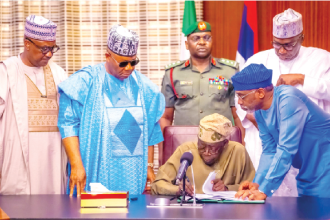

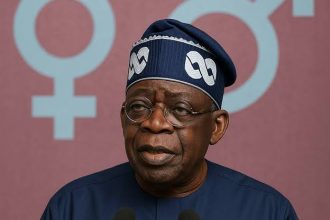
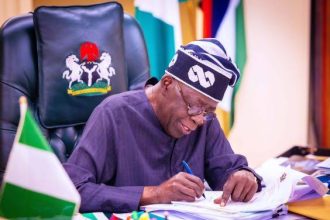

Tinubu’s move ended an unsustainable system that was slowly killing aviation. Though passengers initially faced higher costs, the policy helped restore credibility, liquidity, and investor confidence — ultimately saving the industry from collapse.