




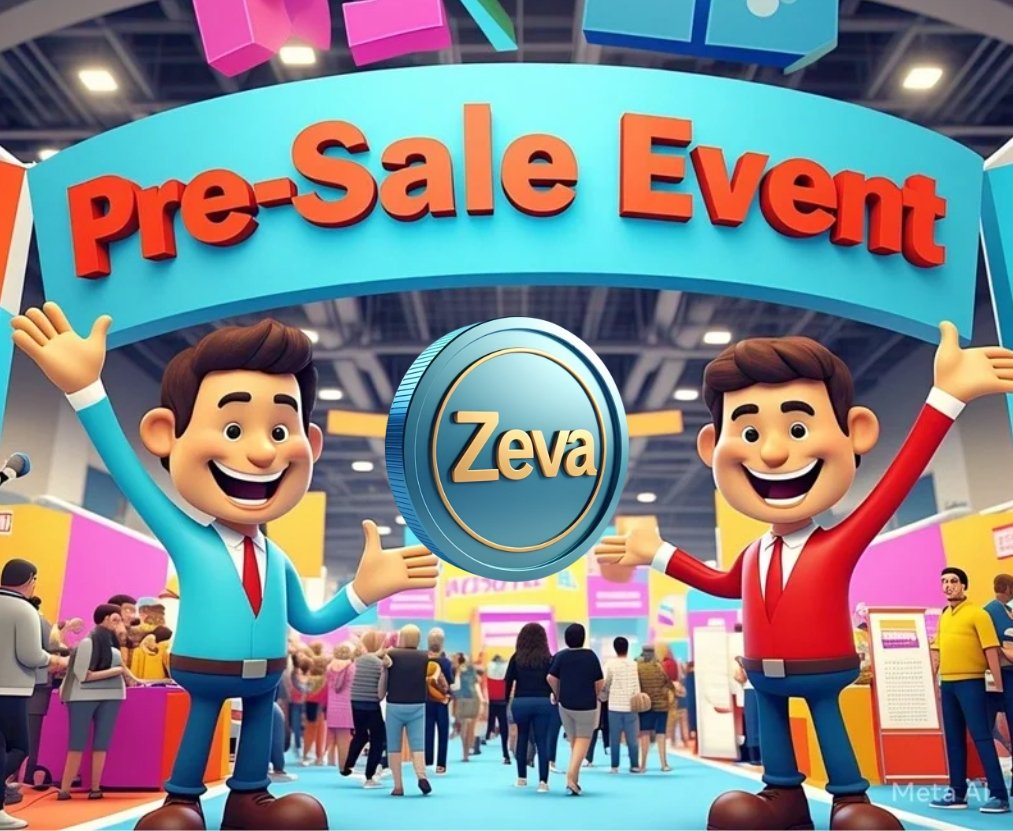
The ZEVA Project has confirmed that its flagship digital asset the Zeva Token, will be officially listed on Cetus DEX, a decentralized exchange built on the Sui Blockchain. The team announced that the much-anticipated trading debut is locked in for September 30, 2025, with all roadmap timelines remaining on track. Migration is currently underway, and token holders have been urged to hold their assets until the transition completes in the coming days.
While the ZEVA community celebrates this progress, the crypto space remains divided. Supporters hail the milestone as a sign of legitimacy, but skeptics continue to voice fears that the project may resemble a Ponzi scheme, raising questions about sustainability and trust. In this in-depth analysis, we examine the upcoming listing, the mechanics of Cetus, ZEVA’s roadmap and tokenomics, and what this means for investors navigating today’s turbulent crypto markets.
Understanding the ZEVA Project
The ZEVA ecosystem aims to combine finance, gaming, and decentralized applications into a multi-utility blockchain network. Unlike projects that only issue a token with speculative intent, ZEVA promises a comprehensive ecosystem:
- ZevaPlay: A play-to-earn gaming platform with mining features and community-driven contests.
- ZevaSwap & ZevaDex: Decentralized trading platforms enabling swaps, liquidity pools, and staking.
- Zeva Blockchain (Future Goal): A standalone chain that will eventually power the entire ZEVA ecosystem, similar to how Binance Coin (BNB) transitioned to Binance Smart Chain.
- Governance: Token holders will play a role in shaping the ecosystem’s future through decentralized decision-making.
The Zeva Token (ZEVA) is designed as the fuel for this ecosystem — facilitating payments, staking rewards, governance votes, and gaming rewards.
The Sui Blockchain Advantage
ZEVA’s integration with the Sui Blockchain is no accident. Sui is a Layer-1 blockchain developed by Mysten Labs, known for its parallel transaction processing and low latency. Unlike Ethereum, which sometimes suffers from congestion, Sui can handle thousands of transactions per second.
Key benefits for ZEVA choosing Sui include:
- Scalability: Ensures the ZEVA ecosystem can grow without bottlenecks.
- Low Gas Fees: Makes everyday transactions affordable for gamers and traders.
- Developer-Friendly Tools: Sui supports Move, a programming language designed for secure smart contracts.
- Active Ecosystem: Sui is attracting a wave of DeFi and GameFi projects, and ZEVA’s presence there aligns with growth trends.
Why Cetus DEX?
Cetus Exchange is a decentralized liquidity protocol on the Sui network. It provides features such as concentrated liquidity, AMM pools, and yield farming, similar to Uniswap and PancakeSwap but optimized for Sui’s infrastructure.
For ZEVA, listing on Cetus offers:
- Immediate Liquidity: Allowing users to trade ZEVA from day one.
- Community Exposure: Tapping into Cetus’s growing user base.
- Decentralization: Avoids reliance on centralized exchanges that may impose listing barriers.
- Trust: A decentralized environment reduces fears of manipulation compared to less transparent exchanges.
Detailed Roadmap: 2025–2030
ZEVA’s roadmap outlines ambitious milestones. Below is a breakdown of the project’s future plans:
| Year | Milestone | Details |
|---|---|---|
| September 2025 | Token Listing | Official debut on Cetus DEX, with initial liquidity pools opening. |
| Q4 2025 | ZevaSwap & ZevaDex | Integration of token swaps, staking pools, and DEX governance. |
| 2026 | Utility Expansion | Payment partnerships and merchant integrations, expanding ZEVA beyond trading. |
| 2027 | Zeva Blockchain | Development of a proprietary blockchain to host the entire ecosystem. |
| 2028–2030 | Global Adoption | Scaling into African and Asian markets, cross-chain integrations, and mainstream financial adoption. |
Tokenomics: Supply and Distribution
A critical aspect of any token launch is tokenomics. ZEVA has announced the following structure:
- Total Supply: 1 billion ZEVA tokens.
- Public Allocation: 40% distributed to the community via mining, play-to-earn, and staking.
- Team & Advisors: 20% vested over 3 years to ensure commitment.
- Liquidity & Exchange Listings: 15% reserved for market-making and liquidity pools.
- Foundation & Ecosystem Growth: 15% to support developers and partnerships.
- Reserves: 10% for unforeseen needs and future scaling.
This distribution is designed to encourage decentralization while ensuring sufficient resources for development and ecosystem expansion.
Community Sentiment: Optimism vs. Ponzi Fears
The ZEVA community is split between optimism and skepticism.
Optimistic Views
“Listing on Cetus shows ZEVA is serious. Unlike projects that only hype listings, ZEVA is executing on promises.”
Skeptical Views
“This feels like another Ponzi. Until we see external audits and adoption, I’m not risking my funds.”
The ponzi scheme allegations mainly stem from fears that ZEVA may rely on new entrants to fund old ones. However, the team argues that their focus on utility-driven growth distinguishes them from fraudulent schemes.
Global Context: Regulation and Trust
The ZEVA launch comes at a time when global regulators are increasing oversight of crypto projects:
- U.S. SEC: Intensifying crackdowns on unregistered securities.
- EU MiCA Framework: Setting comprehensive standards for crypto assets in Europe.
- Africa: Nigeria, where ZEVA has strong roots, is drafting clearer guidelines for digital assets.
For ZEVA, operating within a compliant framework will be crucial to long-term survival.
Case Studies: Lessons from Other Projects
- Shiba Inu: Started as a meme coin but gained legitimacy through community adoption.
- Terra (LUNA): Collapsed due to flawed tokenomics, a reminder of systemic risks.
- BNB: Transitioned from an exchange token to powering one of the largest blockchains in the world.
ZEVA’s trajectory could align with either success stories or failures, depending on execution.
Investor Guidance: Risks and Opportunities
Opportunities
- Early entry before broader adoption.
- Liquidity access on Cetus DEX.
- Potential appreciation if roadmap goals are achieved.
Risks
- Extreme price volatility post-listing.
- Skepticism affecting adoption.
- Regulatory risks, particularly in major markets.
Countdown to September 30
The September 30, 2025 listing on Cetus DEX will be a defining moment for ZEVA. Whether it emerges as a credible ecosystem token or another overhyped project depends on execution, transparency, and adoption. For now, the crypto community waits with both hope and caution as the countdown begins.