




The cryptocurrency market is no stranger to volatility, speculation and sharp reversals. Among the projects attracting sustained community attention is Pi Network Coin (Pi), originally conceived as a mobile-first, low-barrier way for ordinary users to participate in blockchain and crypto. Following Pi’s mainnet launch in February 2025 and a spirited initial exchange listing that drove the token to an early all-time high, the coin experienced an extended downturn. Recently, however, analysts and ecosystem insiders have signalled renewed optimism — with some predicting a bullish run beginning in November 2025 and extending into early 2026.
Background: Pi Network’s Path from Mobile Mining to Mainnet
Founded with the aim of widening access to cryptocurrency, Pi Network differentiated itself by enabling users to “mine” tokens via a mobile app without the energy-intensive proof-of-work model used by earlier cryptocurrencies. Over the years the project accumulated a large, engaged user base: millions of so-called “Pioneers” who participated in the network’s growth ahead of an open mainnet.
After years of development and beta testing, the Pi team launched its mainnet in February 2025 — a milestone that moved the project from a controlled, off-chain environment into a public blockchain framework. Mainnet activation opened the door for exchange listings and broader market participation.
Market Debut and the First Rally
Within days of the mainnet launch, Pi Coin appeared on selected centralized exchanges (CEXs). The pent-up demand from the community and speculative traders resulted in an explosive debut: the token touched an all-time high (ATH) of $3.20 within one week of listing.
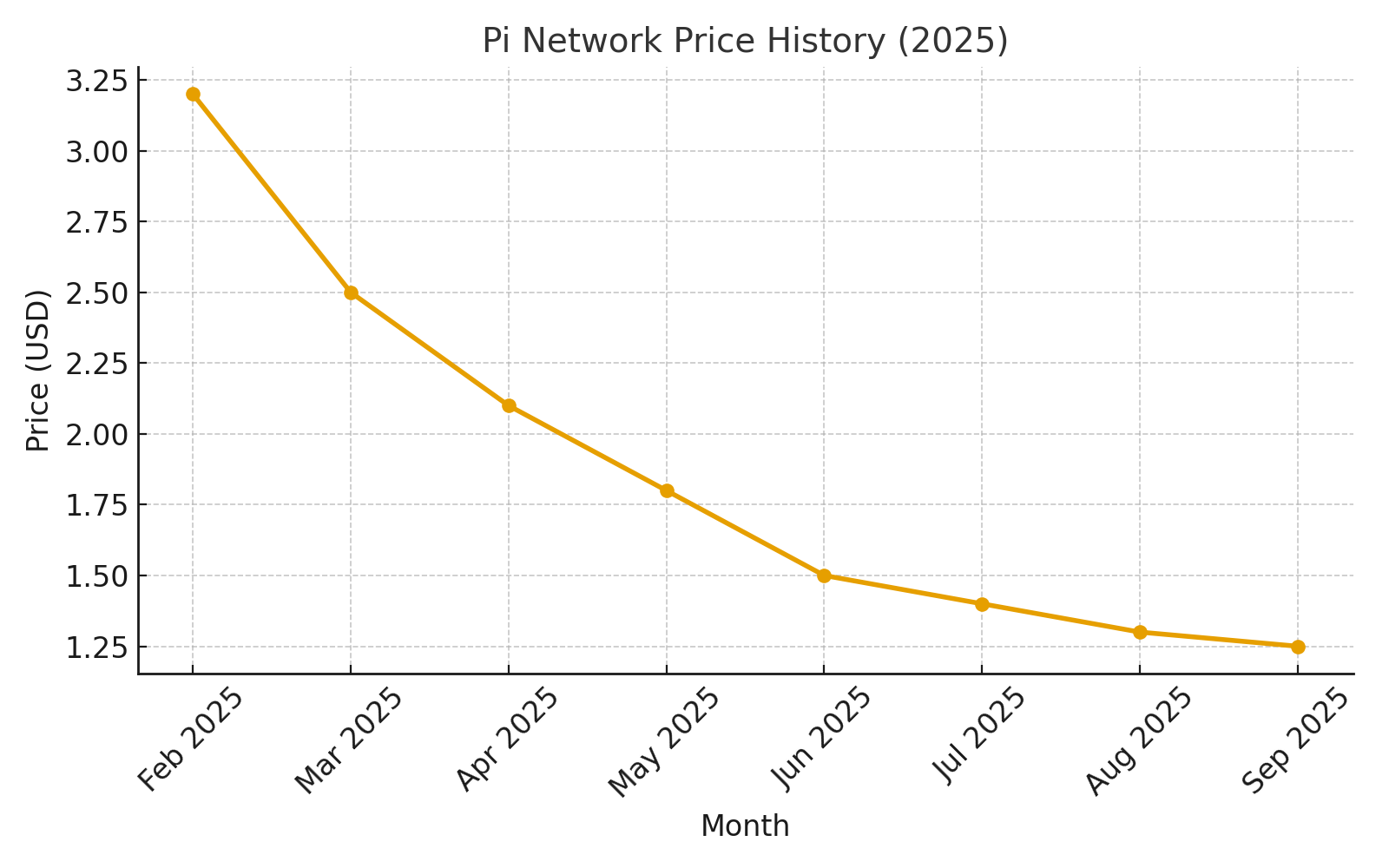
Such early surges are common for newly listed tokens with large, pre-existing communities. However, sustaining that peak requires consistent on-chain utility, a healthy trading environment and broad exchange access — factors that were still in development for Pi.
Six Months of Downward Pressure
Following the initial rally, Pi entered a consolidation and bearish phase. By September 2025 the token’s price had retraced significantly from its ATH and was trading substantially lower. Market participants cited a number of contributing factors: limited exchange listings, a nascent dApp ecosystem, and broader market rotation away from speculative altcoins during that period.
Analyst Forecast: Why November Could Be a Turning Point
Despite the downturn, a recent prediction from an analyst and Texas-based miner has reinvigorated bullish sentiment. Their outlook centers on a few core developments expected before or during November 2025:
- Accelerated Ecosystem Launches: The Pi Core Team has reportedly prioritized the rollout of several foundational dApps, merchant tools and DeFi primitives that would materially increase on-chain utility.
- Expanded Exchange Access: Additional CEX and DEX listings would expand liquidity and make Pi accessible to a broader investor base.
- Community & Developer Growth: Continued user onboarding and developer activity could translate into more real-world use cases.
- Macro Crypto Momentum: If Bitcoin and leading altcoins enter a new bullish cycle, investor capital can flow into promising smaller-cap projects like Pi.
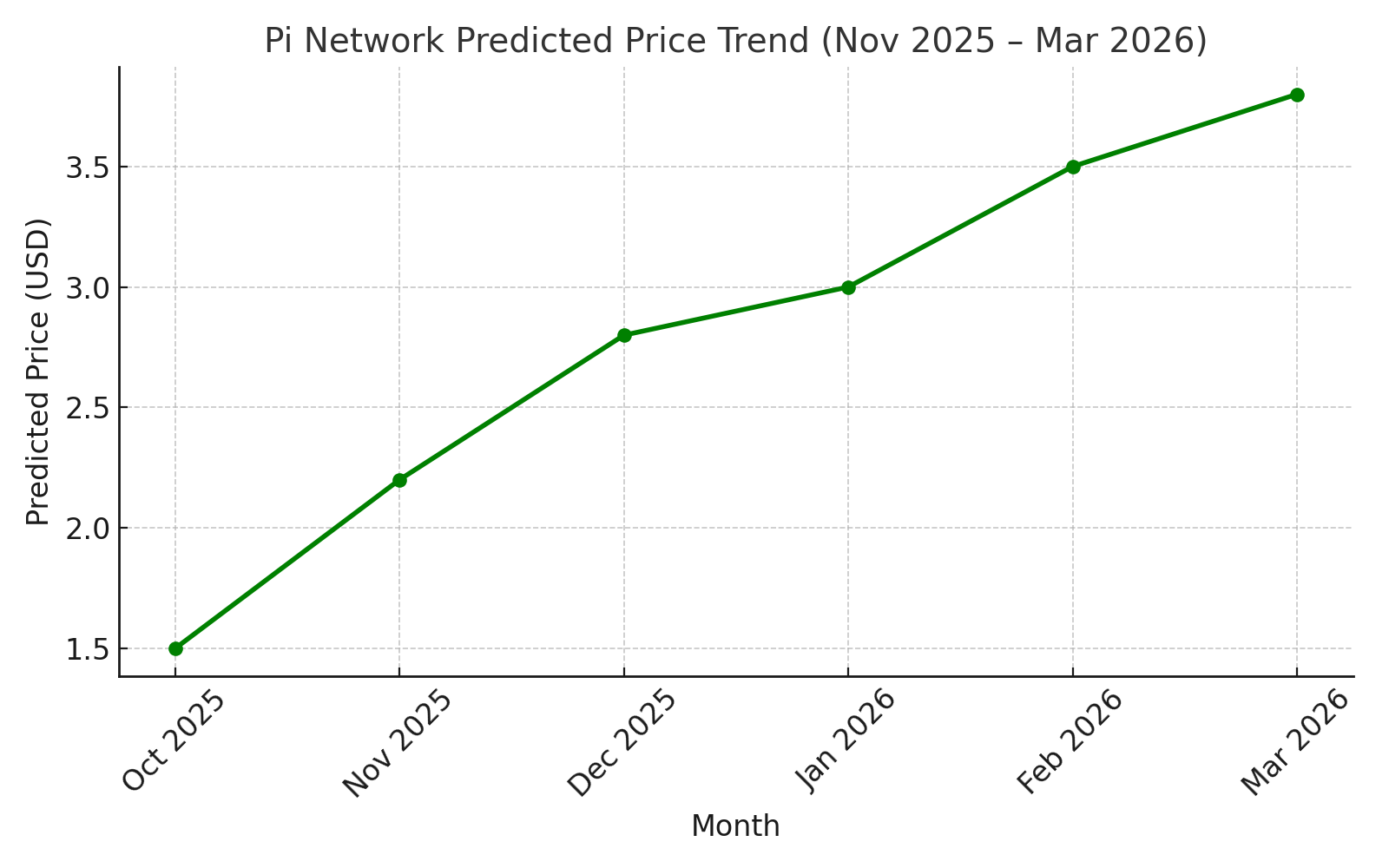
The forecast suggests a gradual re-acceleration: a lift-off in November followed by steady gains through March 2026. Under a favorable sequence of ecosystem launches and listings, the model shows Pi potentially revisiting—or even exceeding—its earlier ATH by early 2026.
Key Milestones and Timeline
The following table summarizes the major milestones relevant to Pi’s recent market activity and the analyst’s forecast horizon.
| Date | Event |
|---|---|
| Feb 2025 | Mainnet launch |
| Feb 2025 | Selected CEX listings; ATH $3.20 |
| Mar–Sep 2025 | 6-month consolidation / bearish trend |
| Nov 2025 – Mar 2026 | Analyst predicts bullish run tied to ecosystem rollouts |

What Ecosystem Progress Means for Pi
Token price appreciation is most defensible when backed by tangible on-chain activity. For Pi this means several measurable milestones could change market perception:
- Operational dApps: Marketplaces, payments rails, or social apps that accept Pi for real goods and services.
- Decentralized Finance (DeFi) primitives: Staking, lending and liquidity pools that let users earn yields and improve token velocity.
- Merchant integrations: Partnerships with e-commerce and local vendors that accept Pi for transactions.
- Developer ecosystem: A growing suite of third-party apps and services built on Pi’s blockchain.
If these building blocks are delivered at scale, Pi’s utility profile would improve — making speculative price action more defensible and encouraging long-term holders.
Community Sentiment: Pioneers and Miners Weigh In
The Pi community, often described as highly engaged and patient, continues to discuss development timetables and potential use cases. The Texas-based miner who shared the bullish outlook emphasized two recurring themes: patience and utility. According to that perspective, early adopters who remain through the ecosystem maturation phase could be best positioned to benefit from future upside.
Risks and Caveats
No forecast is guaranteed. Observers should carefully weigh the following risks:
- Regulatory Uncertainty: Global regulators remain alert to potential consumer risks in crypto markets. Compliance missteps or adverse rulings could affect listings and adoption.
- Execution Risk: Delivering production-grade dApps and merchant tooling is non-trivial. Delays or technical setbacks could dampen sentiment.
- Market Liquidity: Broader listings help, but if order book depth remains shallow, price moves can be exaggerated and volatile.
- Competition & Differentiation: Thousands of tokens compete for developer mindshare; Pi must demonstrate unique value to attract long-term usage.
How Investors Should Approach the News
For readers evaluating Pi as an investment, consider the following checklist:
- Verify exchange listings and whether tokens on those exchanges are fully transferable (not subject to vesting or locks).
- Examine on-chain activity metrics once available: transaction volume, active addresses and dApp usage.
- Monitor official announcements from the Pi Core Team and independent developer activity.
- Diversify and size positions to reflect the speculative nature of early-stage crypto projects.
Long-Term Outlook: Beyond Short-Term Price Moves
Even if Pi achieves a short-term rally as predicted by the analyst, its long-term status will depend on sustained real-world utility, developer adoption and responsible governance. Projects that become pillars of the crypto economy generally demonstrate consistent growth in usage, integrations and developer contributions — a high bar for any emerging blockchain.
That said, Pi’s large community and years of preparation give it a foundation many new projects lack. If the next six months deliver meaningful dApps and liquidity expansions, Pi could graduate from community-focused token to an ecosystem with diverse utility.
Conclusion
Pi Network Coin’s journey from mobile mining concept to a live mainnet token has been dramatic. After an early 2025 peak and a period of retracement, renewed bullish forecasts suggest November 2025 could be a turning point — provided the team successfully rolls out ecosystem features and exchange access improves. Readers should treat forecasts as one input among many and prioritize research, risk management and adherence to local regulations before making investment decisions.