




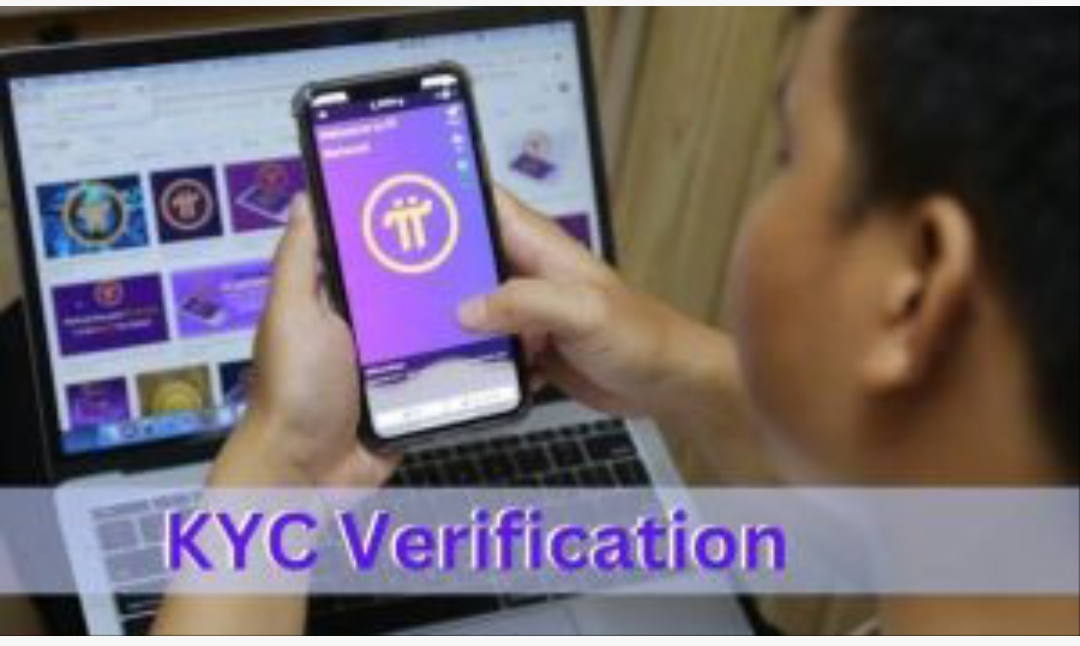
Pi Network recently launched a new Fast Track KYC feature that uses more artificial intelligence inside the KYC flow to enable eligible new Pioneers to activate a Mainnet wallet before completing 30 mining sessions. This article explains the feature in full: how it works, its limitations (notably it does not enable Mainnet migration), technical and organizational context, benefits and risks, developer and user implications, regulatory and privacy considerations, and the likely path forward for Pi’s migration timeline and ecosystem growth. The official announcement and primary details are published by Pi Network.
Executive summary; what you need to know (quick)
- What it does: Fast Track KYC allows eligible new users (including those with fewer than 30 mining sessions and some non-users) to complete an AI-powered KYC flow and activate a Mainnet wallet to access Pi apps and ecosystem utilities earlier than under the old rules.
- What it does not do: Fast Track KYC does not enable transfer of mined balances (Mainnet migration). Migration still requires meeting the full checklist (including the standard KYC and 30 mining sessions requirement for transfer eligibility).
- Where you’ll see it: If you are eligible you will see the Fast Track KYC option in the Pi Wallet app. The feature is rolled out as an in-app path to begin identity verification sooner.
- Why it matters: Enables broader early participation in apps, local commerce, and developer ecosystems while preserving the integrity of the final migration process. News outlets and crypto analysts are already covering the rollout and community reaction.
Table of contents
- Background: Pi Network, Mainnet, and KYC
- What Fast Track KYC is (official description)
- Technical architecture how AI helps
- Step-by-step user experience (UX)
- Eligibility, visibility and rollout mechanics
- What Fast Track KYC enables early wallet activation & ecosystem access
- What it does not enable migration & balance transfer
- Benefits to users, developers and the ecosystem
- Risks, vulnerabilities and mitigations
- Privacy, data governance, and regulatory considerations
- Comparisons with other KYC approaches in crypto
- Case studies & usage scenarios
- Economic impacts and tokenomics effects
- Operational and scaling challenges for Pi
- Community reaction and adoption signals
- Roadmap: how Fast Track KYC fits into Mainnet migration
- Recommendations for users, developers, and regulators
- Appendices: charts, tables, checklists and templates
- Conclusion: significance and outlook
1. Background: Pi Network, Mainnet, and KYC
To understand the significance of Fast Track KYC, we must first briefly revisit Pi Network’s evolution and why KYC is central to Mainnet operations. Pi Network is a mobile-first blockchain project that started with the premise of making cryptocurrency mining accessible via smartphones. Over time it scaled to tens of millions of Pioneers and built an ecosystem of wallet, apps, and developer opportunities.
Mainnet migration is the moment when on-app or testnet balances and identities are aligned with the production blockchain ledger and users can finally own and transfer tokens onchain. Because decentralised ecosystems rely on real, unique humans (and because airdrops and token grants can be gamed), identity verification is a routine and contentious requirement for ensuring that tokens are distributed fairly and not claimed by fraudulent or duplicate accounts.
Historically, Pi required users to reach thresholds (the 30 mining sessions rule among them) before they could apply for KYC and be included in the migration eligibility checks. This helped throttle volume so the verification infrastructure could scale and allowed Pi to assess real engagement. But as Pi matured, community demand for faster onboarding and earlier developer testing grew, motivating solutions such as the new Fast Track KYC. The official Pi blog notes the feature was implemented to make wallet activation more accessible and inclusive while maintaining security standards.
2. What Fast Track KYC is (official description)
According to Pi Network’s announcement, Fast Track KYC is an AI-augmented verification lane inside the Pi KYC flow that allows certain new Pioneers including those with fewer than 30 mining sessions, and even non-users who meet eligibility rules to complete identity verification and activate a Mainnet wallet earlier than before. Activation unlocks wallet functions and access to app interactions inside the Pi ecosystem, but does not enable the transfer of mined PI tokens onto the Mainnet chain.
Key official points (summarised):
• Fast Track KYC uses more AI in the flow to speed identity verification.
• Eligible users see the option directly in the Pi Wallet app and can begin the early KYC flow.
• Activating a Mainnet wallet via Fast Track KYC grants access to Pi apps, commerce and community utilities earlier.
• Fast Track activation does not remove the migration prerequisites: migrating mined balances still requires completion of required checklist items (e.g., the standard KYC, completing 30 mining sessions when required) and further migration controls.
3. Technical architecture; how AI helps
KYC pipelines historically have three broad stages: document capture/ingest, identity matching (face vs document), and fraud/sybil detection. Each stage can be human-reviewed, algorithmically assessed, or a combination. AI helps accelerate and scale each stage via: automated document parsing (OCR + template matching), facial liveness and biometric matching, and anomaly/fraud detection (behavioral and image-based signals). Fast Track KYC reportedly increases the degree to which AI handles those stages, enabling a larger portion of verification to be completed automatically and more quickly than a fully human-supervised pipeline.
3.1 What AI typically does in modern KYC flows
- Document OCR and classification: Extracts fields like name, DOB, ID number and compares them against known document templates for consistency.
- Facial matching & liveness detection: Ensures the selfie belongs to the person in the ID and detects presentation attacks (photos, deepfakes, masks, replays).
- Anomaly scoring: Flags suspicious submissions based on patterns drawn from training data: duplicate IDs, repeat face matches across different accounts, impossible DOBs or metadata mismatches.
- Risk scoring for automated decisions: Produces a risk score that can trigger either an automatic acceptance, an automatic rejection, or escalation to human review.
In Fast Track KYC, Pi appears to shift more decisions to trustworthy automated workflows so that a greater share of routine checks are handled without manual review. This both reduces latency for clear, high-confidence submissions and frees human KYC auditors to focus on complex or contested cases. Many modern identity platforms use a hybrid of AI automation plus human oversight exactly for this reason.
4. Step-by-step user experience (UX)
A typical user journey through Fast Track KYC is described below. The exact UI text and steps may change as Pi iterates on the product, but the official blog and in-app indicators provide the core flow.
- Eligibility check & in-app prompt: When a user opens the Pi Wallet app, the wallet checks eligibility rules server-side. If eligible, the app surfaces a “Fast Track KYC” option within the KYC / Wallet Activation area.
- Begin Fast Track KYC: User taps the option and is asked to provide identity documents (e.g., national ID, passport) and a live selfie video or liveness selfie depending on requirements.
- Automated processing: The submission is routed through AI modules: OCR, facial match, liveness, and anti-fraud checks. A risk score is computed. The system either returns a high-confidence pass, a reject, or escalates to human review.
- Result & wallet activation: On a pass, the user receives a confirmation and is allowed to “activate” the Mainnet wallet within the app. This activation unlocks wallet functionalities such as receiving on-chain interactions within Pi apps and participating in commerce or app features that rely on an activated wallet.
- Post-activation: The user can interact fully with Pi apps, but token balances remain non-migrated until the user meets migration prerequisites (detailed below).
Fast Track KYC UX journey — Eligibility → Document capture → AI processing → Activation → App access
5. Eligibility, visibility and rollout mechanics
The official rollout emphasizes that Fast Track KYC is targeted at “new Pioneers and non-users” and is visible to those who meet the eligibility criteria via the Pi Wallet app. Eligibility likely includes geo/locale eligibility (where KYC is permitted), device and app version checks, and internal risk/capacity thresholds. Pi’s team intentionally retains control over rollout pacing so that the system can scale without overwhelming human checks or introducing unacceptable risk.
Note: Because eligibility is dynamic, seeing no Fast Track option does not mean you will never be eligible it may simply mean you are not currently included in the cohort or your country/locale is not yet supported.
6. What Fast Track KYC enables early wallet activation & ecosystem access
Activating the Mainnet wallet via Fast Track KYC grants users earlier access to a set of ecosystem capabilities that previously required a completed KYC and migration. While exact app features will vary by developer, the general benefits include:
- Access to Pi Apps: Users can authenticate to applications that require an activated Mainnet wallet (marketplaces, finance apps, DeFi-style services built on Pi, social apps with in-app economy, etc.).
- On-platform commerce: Access merchant or peer payments within Pi apps where the wallet is the identity anchor for transactions or listings.
- Developer testing & engagement: Developers benefit from a larger, verified user pool to test app UIs, economic flows, and onboarding funnels earlier in the lifecycle.
- Community participation: Users gain access to certain community governance or event features requiring verified wallets.
Although the wallet is activated, Pi’s announcement clarifies that the wallet may operate in ways limited by migration status (e.g., not able to receive balance transfers from the migration engine). Activating early is primarily about identity and access rather than moving balances.
7. What Fast Track KYC does not enable migration & balance transfer
This is the single most important operational caveat: Fast Track KYC does not enable Mainnet migration. Passing Fast Track KYC does not automatically make a user eligible to receive migrated PI balances. The network still requires completion of the Mainnet migration checklist (which includes session thresholds and potentially additional validation steps) before mined balances are transferred to an on-chain address. The Pi team states this explicitly to guard token distribution integrity.
In short: Fast Track = identity verification + wallet activation for app access. Migration = transfer of mined balances onto the chain (still gated by migration criteria).
8. Benefits to users, developers and the ecosystem
The launch of Fast Track KYC creates tangible benefits across stakeholders:
8.1 For users (Pioneers)
- Earlier utility: Access to apps and commerce earlier than before increases immediate value to joining Pi and reduces friction.
- Onboarding speed: New Pioneers get a faster path from sign-up to practical engagement.
- Opportunity to learn: Early activation lets users learn wallet flows and app interactions before migration complexity arises.
8.2 For developers
- Larger verified audience: Developers can test with verified users earlier, an important signal for real product feedback and monetization experiments.
- Faster adoption curve: App products can iterate faster with more engaged, identity-verified testers.
8.3 For the Pi ecosystem
- Network effects: Increased early participation may accelerate network effects for apps and services.
- Cleaner signals: Verified users are higher quality for trust flows inside apps (ratings, tied identities, reputational systems).
- Reduced human load: Automating part of KYC frees human auditors to focus on edge cases, which improves throughput and quality control for migration events later.
9. Risks, vulnerabilities and mitigations
Any more automated KYC pipeline increases both scalability and exposure to certain AI-related risks. Below we outline the primary concerns and how the design can mitigate them.
9.1 False negatives and false positives
AI engines may either incorrectly reject a valid user (false negative) or incorrectly accept a fraudulent submission (false positive). Both outcomes are harmful: false negatives frustrate legitimate users; false positives threaten network integrity. Mitigations:
- Conservative thresholds for auto-acceptance — only high-confidence cases are auto-accepted; lower confidence cases escalate to human review.
- Multi-modal verification — combining document, face, behavioral signals and metadata reduces single-axis errors.
- Continuous model retraining with verified ground truth data to reduce bias and failure modes.
9.2 Demographic bias and accessibility
Computer vision models historically underperform on demographic groups underrepresented in training data. If not addressed, this leads to a disproportionate rate of failures for certain populations. Mitigations:
- Use diverse training sets and audit model accuracy across demographics.
- Keep fallback human review and alternative verification channels (e.g., manual ID checks) for groups affected by automated errors.
9.3 Deepfakes and presentation attacks
Liveness detection is essential to prevent presentation attacks. Robust liveness checks (video selfies, multi-frame motion cues, challenge-response) and forensic signals help detect deepfakes. Mitigations include combining liveness with geolocation and metadata anomalies to flag suspicious attempts.
9.4 Privacy and data protection risks
Processing identity documents and biometric data raises privacy risk. Mitigation includes encryption of data at rest, limited retention policies, storing biometric templates rather than raw images where possible, and clear user consent flows. We discuss data governance in more detail in section 10 below.
10. Privacy, data governance, and regulatory considerations
KYC necessarily involves handling sensitive personal data. Best practices and regulatory expectations vary across jurisdictions, but core principles apply.
10.1 Consent and transparency
Users must clearly consent to data collection, understand what is collected, how long it is stored, and for what purposes. Pi should maintain user-facing privacy notices that are accessible inside the Wallet app, including country-specific guidance where regulation differs.
10.2 Data minimization and retention
Collect only what is necessary and retain it for the minimum time required to meet legal obligations and operational needs (e.g., fraud investigatio
Impact on the Pi Ecosystem
The introduction of the Fast Track KYC feature is more than just a technological update; it represents a major milestone in the evolution of the Pi Network ecosystem. By allowing early wallet activation, pioneers can explore Pi apps, participate in decentralized activities, and become part of the digital economy without the delay traditionally imposed by standard KYC verification.
This change has several direct and indirect impacts on the ecosystem:
- Accelerated User Engagement: Millions of pioneers can begin using Pi apps earlier, leading to higher adoption rates for decentralized applications (dApps).
- Boost for Developers: App creators within the Pi ecosystem now have a larger pool of test users, which enables them to refine their products faster and deliver real-world use cases.
- Increased Liquidity: As more pioneers use wallets and engage with apps, the volume of transactions grows, adding momentum to the Pi economy.
- Global Inclusivity: Fast Track KYC helps users in regions where verification delays were particularly difficult, such as areas with limited internet access or document processing barriers.
In essence, Fast Track KYC serves as a catalyst for growth, transforming the Pi ecosystem into a more vibrant and dynamic network even before full migration is unlocked.
Limitations and Concerns
While the Fast Track KYC feature offers undeniable advantages, it is important to highlight its limitations to maintain transparency and manage expectations. Most significantly, Fast Track KYC does not enable Mainnet migration. This means that although pioneers can activate their wallets and explore Pi apps, they cannot yet move their mined Pi to the open network.
Other concerns include:
- Fraud Prevention: While AI reduces the chances of manipulation, no system is perfect. Safeguards must continually be improved.
- Privacy Issues: Handling sensitive data such as identity documents raises questions about security, data storage, and user consent.
- Eligibility Restrictions: Not all pioneers will see the Fast Track option immediately, which could lead to confusion or perceived inequality.
- Dependence on AI: Over-reliance on AI without human review may create errors, especially in regions with limited identity record systems.
By acknowledging these concerns, Pi Network ensures that expectations remain realistic while demonstrating its commitment to transparency and long-term trust.
Comparing Pi Network’s Fast Track KYC with Other Blockchain Projects
In the broader blockchain industry, KYC remains a controversial yet necessary process. Most exchanges, wallets, and crypto platforms demand verification before granting full access to services. Let us compare Pi’s Fast Track KYC with traditional approaches:
| Platform | KYC Requirement | Speed | Unique Features |
|---|---|---|---|
| Binance | Mandatory for withdrawals | 1–3 days | Global compliance; video verification |
| Coinbase | Mandatory before trading | Instant to 2 days | Bank integration for U.S. users |
| Decentralized Exchanges (DEXs) | Often no KYC | Instant | Non-compliant with most regulations |
| Pi Network (Fast Track KYC) | AI-based partial verification | Almost instant | Allows wallet use without full migration |
From this comparison, it is evident that Pi Network is pioneering a middle path: it leverages AI to provide rapid verification for early access while still maintaining rigorous standards for final Mainnet migration. This balance ensures inclusivity without compromising on compliance.
Future of KYC in Blockchain
The Fast Track KYC initiative provides a glimpse into what the future of blockchain identity verification could look like. As artificial intelligence evolves, KYC is expected to become faster, more accurate, and less intrusive.
Potential future trends include:
- Universal Digital Identity: A blockchain-based identity that can be used across multiple platforms and ecosystems.
- Zero-Knowledge Proofs (ZKPs): Verification methods where users prove identity attributes without revealing personal data.
- Global Regulatory Frameworks: International cooperation to harmonize KYC standards.
- Biometric Authentication: Increased reliance on fingerprints, voice, or retina scans for instant validation.
Pi Network’s use of AI-driven verification puts it ahead of the curve, serving as a testbed for what may eventually become the global standard in Web3 identity management.
Case Study Scenarios
To illustrate the real-world impact of Fast Track KYC, let us consider a few case studies:
Case Study 1: A New Pioneer in Nigeria
Before Fast Track KYC, a pioneer in Nigeria would have to mine consistently for 30 sessions before activating a Mainnet wallet. Now, with Fast Track, this user can activate their wallet within days, explore Pi apps such as e-commerce or gaming platforms, and start contributing to the ecosystem immediately.
Case Study 2: Developer Testing an App
A developer building a decentralized finance (DeFi) app on Pi Network benefits from a larger pool of early users. With Fast Track KYC, the app gains active wallets sooner, providing valuable feedback and accelerating the app’s improvement cycle.
Case Study 3: Regulatory Oversight
From the perspective of regulators, Pi’s hybrid KYC approach demonstrates a strong commitment to compliance. By requiring full KYC before migration but allowing AI-assisted onboarding for early use, Pi shows how blockchain projects can strike a balance between user growth and legal obligations.
Opportunities for Pioneers
For pioneers, Fast Track KYC represents more than convenience; it is a strategic opportunity. Early access to wallets enables:
- Exploration of decentralized apps (dApps) that may shape the future of Pi’s economy.
- Participation in utility creation, from gaming and e-commerce to financial services.
- Increased familiarity with blockchain technology, preparing users for eventual Mainnet migration.
- Enhanced confidence in Pi’s long-term sustainability as a global digital currency.
By giving pioneers this early edge, Pi Network ensures that its community remains engaged, motivated, and prepared for the next phase of adoption.